Synthetic Urine: Get Caught Using It for a Drug Test and ‘Urine’ Trouble
By Alison Adduono, Director of Marketing
On a recent webinar about oral fluid testing and its benefits, the topic of synthetic urine was brought up. During the discussion I realized that while collectors are very familiar with synthetic urine — some employers (especially those new to drug testing) may not be.
What is synthetic urine?
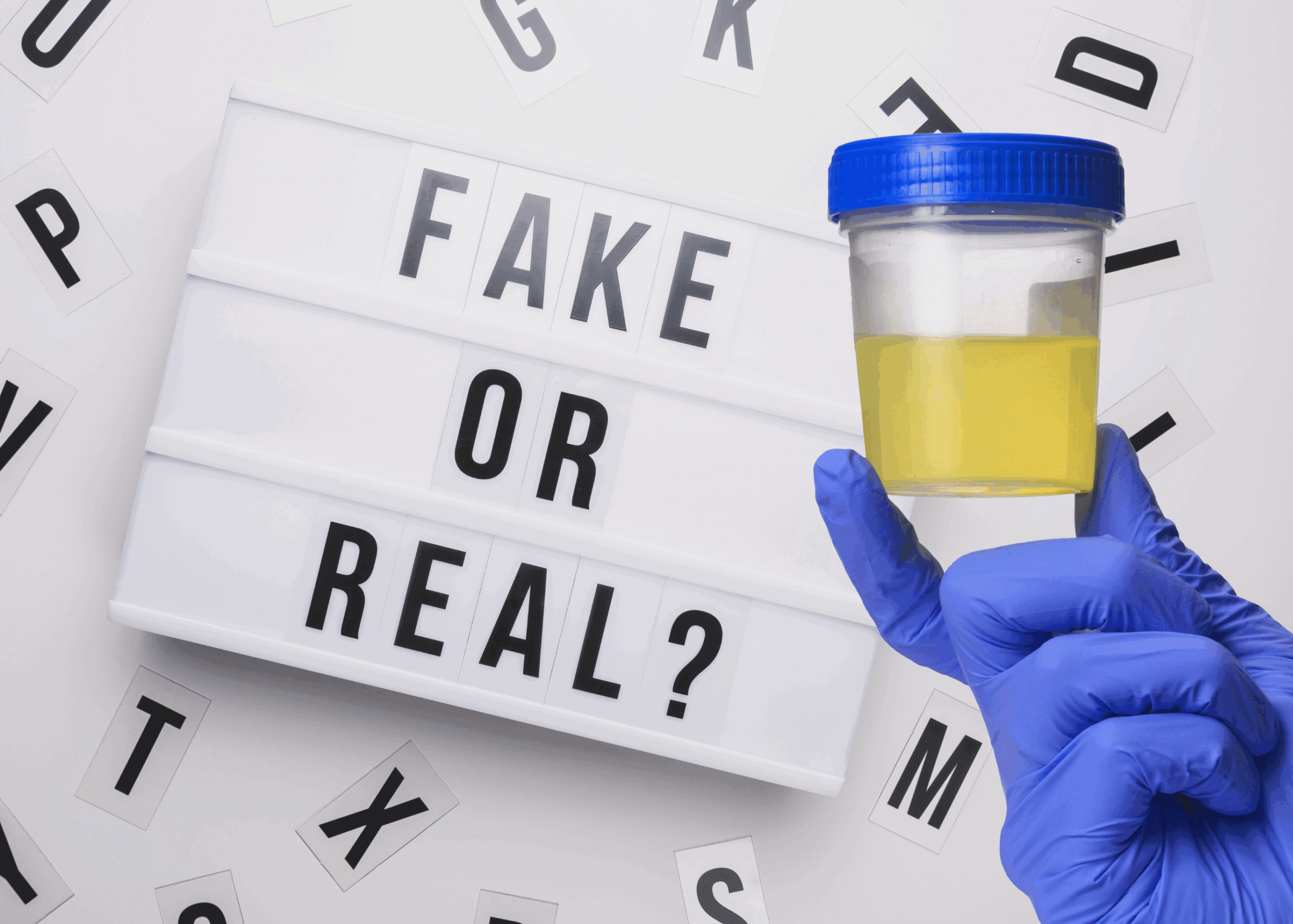
Synthetic urine (aka fake pee) is a lab-created substance that replicates the chemical and physical characteristics of real human urine. Urea is the primary component of urine, and in synthetic variants, it’s created artificially and mixed with water, creatinine, and occasionally uric acid.
Manufacturers of synthetic urine strive to replicate the essential characteristics of natural urine that detection tests measure. This includes the chemical makeup, pH levels, specific gravity, appearance, and smell.
Why do people use synthetic urine?
Initially it was developed for testing products like cleaning solutions and diapers. But now, it has become another tool for individuals looking to cheat drug tests. Available for purchase at many online sites, donors smuggle in and use this fake urine for drug test collections.
Lab Statistics
Lab giant Quest Diagnostics processed almost 9.8 M occupational drug tests in 2023 and reported some troubling statistics earlier this year.
- A significant 633% increase in substituted urine samples (>6000 specimens). – A 30 year high in drug test tampering. According to the UNC School of Government, substituted samples could be biological (i.e. another person’s urine – caught at collection, synthetic urine, animal urine) or non-biological (i.e. apple juice, water, etc.).
- A 45% increase (an additional 25K tests) were deemed invalid.
- Occupational drug test positive rates were also at their highest in two decades seeing a 5.7% jump.
Synthetic urine detection
Collectors are the first line of defense in catching the use of synthetic urine. Some common techniques they use are:
- Checking the temperature – when freshly collected, real urine ranges between 90°F and 100°F (32°C to 38°C) whereas synthetic urine usually fails to match this range.
- Specimen validity testing (SVT) – also referred to as adulteration testing, many collectors either use standalone adulteration test strips or utilize instant tests that have specimen validity testing built in. Adulteration tests look at several parameters such as specific gravity, pH, creatinine, nitrites, glutaraldehyde, and/or oxidants/pyridinium chlorochromate).
- Observed collections – while not all employers require this, some employers require that the urine collections are fully observed so that donor does not have an opportunity to swap specimens with either synthetic urine, water, another donor’s urine, or another liquid.
- Identifying suspicious behavior – trained professionals look for suspicious behavior such as an unusual amount of time in the restroom, no urine in toilet, items possibly being smuggled in, etc.
- Visual inspection – collectors can also visually inspect the urine specimens for color and smell. Real urine usually has a stronger odor. It also can form bubbles when shaken due to protein it contains whereas fake urine typically lacks that protein and will not froth or form bubbles when shaken.
Lab analysis
Although synthetic urine products can replicate the look and composition of genuine urine, drug testing laboratories have become increasingly sophisticated in detecting adulterated and substituted specimens. Chemical analysis and specimen validity testing with GC/MS (gas-chromatography/mass-spectrometry) or LC/MS/MS (liquid chromotography) can detect the presence of synthetic compounds not typically found in natural urine.
Unfortunately, some behaviors may not be caught by the collectors or laboratories as some donors have taken steps to self-catheterize themselves or inject their bladder with the clean urine.
Synthetic urine legality
Beyond the immediate issues a donor might face due to the reason for their test (such as lost employment or legal matters), being caught using synthetic urine could lead to even more significant consequences. While not banned on a federal level, there are some states that have banned its sale, use and manufacture. And in some instances, some states have even criminalized its usage. In the case of Mississippi, lawmakers even passed an act in 2018 that fines individuals $1000 and/or issues jail terms of 6 months if they attempt to cheat a drug test with synthetic urine.
What can employers do?
People that are intent on trying to cheat a test will either consume or use products to subvert the test. Employers have a few different options:
- To not give the employees a heads up with scheduled tests and use random testing.
- If using instant urine tests, require that adulteration testing is included.
- If performing your own collections, ensure that staff is adequately trained to detect potential swapped specimens.
- They may even select to require observed collections (if legally permissible – some states prohibit observed testing).
- Select oral fluid testing which is harder to adulterate/swap due to observed collections.
Need to set up drug testing services with our Third Party Administration (TPA) group or want to purchase any instant urine or oral fluid testing products contact us today at orders@origin.net.
Resources:
- Reasons to avoid synthetic urine or fake pee to pass a drug test | Leafly
- Workforce Drug Test Cheating Surged in 2023, Finds Quest Diagnostics Drug Testing Index Analysis of Nearly 10 Million Drug Tests – May 15, 2024
- ADULTERATION (unc.edu)
- How to Hide Urine for a Supervised Drug Test: Female & Male Tips – Family Medicine for America’s Health (fmahealth.org)
- Thwarting drug test cheaters | Quest Diagnostics (employersolutions.com)
- Is Synthetic Urine Legal? – Legal Reader
- In What States Is Synthetic Urine Illegal? (Latest Info) (urinedrugtesthq.com)
- You can be fined or jailed for cheating a drug test in many states – CleanFleet
- Online Drug Screening Training | Quest Diagnostics