Medetomidine in Street Drugs: A New Threat in the Illicit Drug Landscape
As if the flesh-eating zombie drug xylazine weren’t alarming enough, health officials are now confronting a new threat: a powerful sedative called medetomidine.
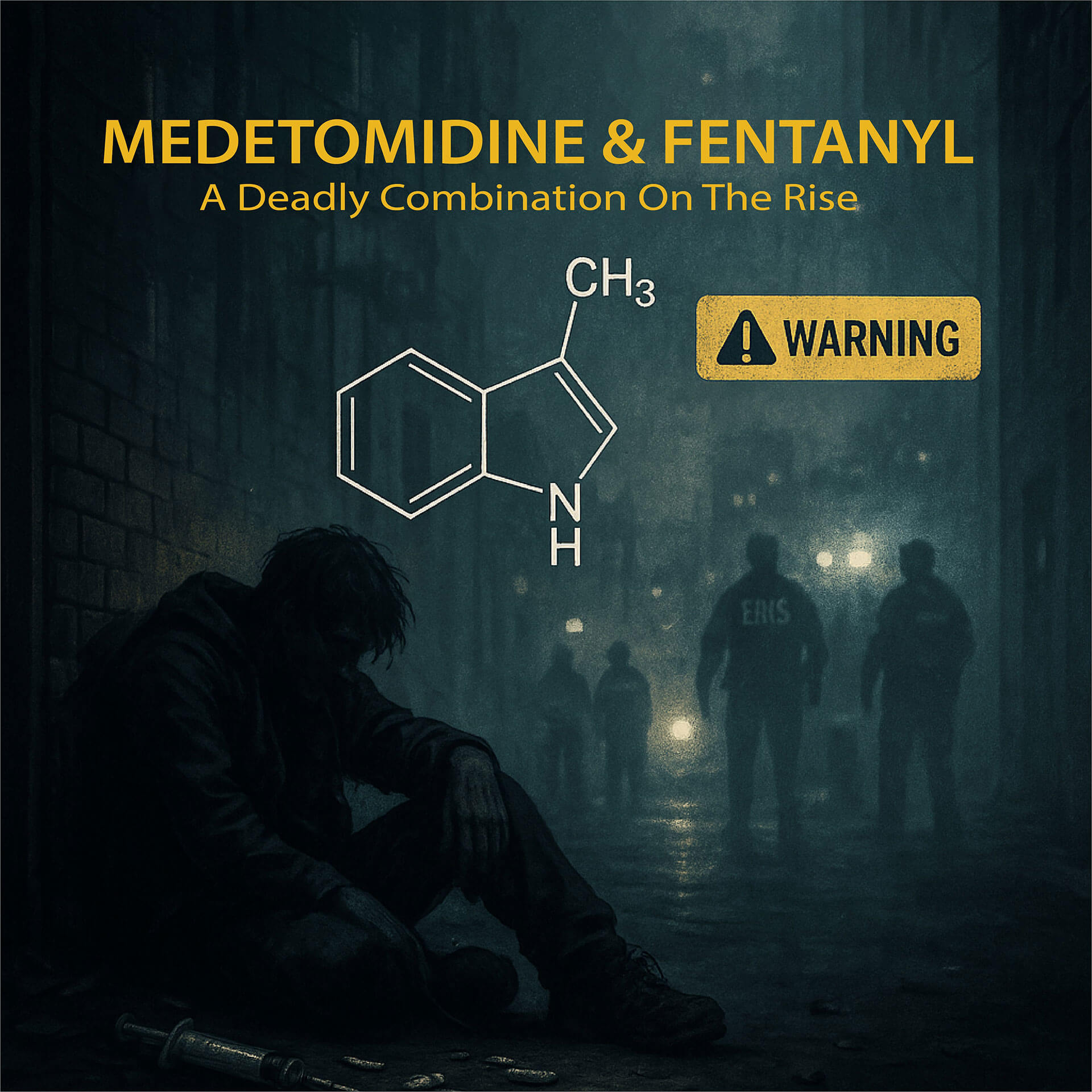
In recent years, the illicit drug supply has grown increasingly volatile and hazardous. A particularly troubling development is the appearance of Medetomidine in street drugs, being used as a cutting agent, especially in opioids like fentanyl. According to the Philadelphia Department of Public Health, medetomidine now appears in drug-checked samples at twice the rate of xylazine. This alarming trend has triggered public health warnings across North America, as the drug has been linked to overdose surges and shows limited response to conventional overdose treatments.
What Is Medetomidine?
Medetomidine (pronounced meh-deh-TOH-muh-deen) is a veterinary drug used for sedation, muscle relaxation, and pain relief, commonly during surgical procedures. It belongs to a class of medications known as alpha-2 adrenergic agonists, which function by reducing the release of adrenaline in the brain and body. Although its sedative effects are similar to those of xylazine, it is upward of 200-300 times more potent according to the Drug Enforcement Agency (DEA). It suppresses brain signals in the central nervous system, leading to deep sedation.
How Is It Being Abused?
Since 2022, Medetomidine in street drugs has been increasingly identified in the illicit opioid supply, frequently appearing alongside fentanyl and xylazine. It has been linked to overdose incidents across the United States and Canada, including significant outbreaks in cities such as Chicago, Philadelphia, and Toronto. In many of these cases, toxicology reports revealed medetomidine in individuals who experienced bradycardia (a dangerously slow heart rate) and deep sedation that did not respond to naloxone, the standard medication used to reverse opioid overdoses.
Medetomidine Drug Crisis: Why Is It Dangerous?
- Not Detected in Standard Drug Tests: Medetomidine is typically absent from routine toxicology screenings, making it harder to identify and treat in clinical settings.
- No Approved Antidote for Humans: While atipamezole can reverse medetomidine’s effects on animals, it is not approved for human use, leaving healthcare providers with limited treatment options during overdoses.
- Risk of Severe Withdrawal: Emerging evidence suggests that medetomidine may trigger intense withdrawal symptoms, complicating recovery for individuals unknowingly exposed to the drug.
Challenges for Health Care Workers
- Significant Clinical Challenges in Withdrawal Management: Medetomidine poses serious difficulties for healthcare providers treating withdrawal. Patients often present symptoms such as rapid heart rate, extreme spikes in blood pressure, agitation, confusion, disorientation, and intense vomiting. While some of these symptoms resemble those seen in opioid or xylazine withdrawal—though typically less severe—the volume of affected individuals and the intensity of their symptoms are both unprecedented.
- Limited Effectiveness of Naloxone for a Medetomine Overdose: In overdose cases involving both opioids and medetomidine, naloxone can restore breathing by reversing the opioid effects. However, it does not counteract the sedative impact of medetomidine, leaving patients in a deeply sedated state despite treatment.
Public Health Response
The CDC and other health agencies have issued alerts to increase awareness among healthcare providers, emergency responders, and the general public. Current efforts focus on:
- Training clinicians to recognize signs of medetomidine toxicity.
- Expand drug testing capabilities.
- Monitoring the illicit drug supply for new and dangerous adulterants.
What Can Be Done?
- For Healthcare Providers: Stay updated on emerging drug adulterants and consider medetomidine as a possible factor in cases of unexplained sedation or bradycardia.
- For Harm Reduction Workers: Raise awareness in communities about the dangers of contaminated drug supplies and encourage the use of drug-checking services.
- For the General Public: Understand that even though you may be familiar with substances the presence of medetomidine in street drugs is a possibility. Any illicit drug may be tainted with potent drugs like medetomidine or xylazine, etc. Never use drugs alone and always carry naloxone—it may not reverse medetomidine’s effects, but it can still be lifesaving in opioid-related overdoses.
Resources:
- Philly’s street fentanyl contains an industrial chemical called BTMPS that’s an ingredient in plastic
- hip.phila.gov/document/4874/PDPH-HAN-00444A-12-10-2024.pdf/
- Medetomidine is replacing xylazine in Philly Street fentanyl − creating new hurdles for health care providers and drug users
- ‘The next coming nightmare’ arrives: Medetomidine rapidly overtakes xylazine | LehighValleyNews.com
- 2025 National Drug Threat Assessment
- Mass. drug supply alert warns of new sedative stronger and longer-lasting than xylazine – masslive.com